Please confirm that you are 18 years or older to continue.

Royal Navy Ship's Captain Napoleonic Wars
Royal Navy Seagoing Captain from the Napoleonic Wars

THE ROYAL NAVY
CAPTAIN
“Sail Ho”
1805
The cry from the sharp-eyed lookout at the fore masthead, ‘Sail Ho- Fine on the Larboard Bow’, sent a rustle of excitement through the crew of the Frigate Hebe, 32 Guns, two months out of Cape Town and homeward bound for Plymouth. As the Officer of the Watch leapt up into the futtock shrouds, telescope under his arm, ready to make an identification as soon as the strange sail became visible from the deck, a midshipman was despatched to call the Captain on deck. A sail could mean many things; a possible prize if it was an enemy merchantman or a small man-of-war which could be quickly overwhelmed by the frigate’s 18-pounders; an opponent to be avoided if it turned out to be a French or Spanish two- or three-decker with a broadside weight and range that could disable the frigate in minutes. It could well be a British ship which would be a welcome source of news, stores, water and seamen but, most of all, a chance to check the unreliable chronometer with ‘London Time ’, enabling the Captain to check and update the ship’s longitude position.
Hebe’s Captain, John Taylor, depicted in this figurine, was a typical seagoing Captain of the era. He was born into a professional family in Wiltshire, joined the Royal Navy, and went to sea at age 15 as a midshipman. John Taylor passed the examination at Portsmouth to become a Lieutenant 8 years later; any candidate for promotion to the quarterdeck needed at least six years' sea experience. Unlike the Army, commissions in the Royal Navy could not be purchased, so that, in general, naval officers were appointed and promoted on merit -although having an admiral or a captain in the family had its advantages. The famous Admiral Rodney promoted his son to Captain in 1780, at the age of fifteen. Unfortunately, this young man was court-martialled five years later for negligence and barred from any further promotion. At the age of 50 he was still a Captain!
John Taylor had achieved the rank of Captain just before his 30th birthday, and the Hebe was his first command. At 34, he was rewarded with his second epaulette denoting three years in post as Captain. He was very aware that when at sea, he was more fortunate than many of his fellow officers. There was always a surplus of officers for ships, and it is estimated that at the end of the Napoleonic War there were approximately 500 commissioned captains waiting for a sea posting; many officers, after being commissioned, were put on the ‘half pay list’ and remained there for the rest of their lives.
The Navy never had any problem in attracting potential officers. The aristocracy, the gentry, and the rising middle classes competed to have their sons serve as midshipmen, as, despite all its hazards, a naval career offered the chance of fame, riches, and entry into the highest places in the country. The British class system was much less rigid than that of many other European countries, and a family could rise, with luck and ambition, by several ranks in one lifetime. If he could capture a few valuable prizes, there was no reason why John Taylor could not buy land to confirm his rising status, which would permit his family to marry into the ranks of the lesser aristocracy, where substantial financial assets would count for much more than dubious heredity.
John Taylor took one look at the strange topsails through his telescope and decided to inspect them more closely. ‘Steer north-north-east, helmsman, and clear for action’. Perhaps his first land purchase was just over the horizon.
Handmade in Scotland
Each sculpture comes on a handcrafted wooden base.
Choose from our Presentation Base, which allows up to 4 lines of plaque text, or upgrade to our deeper Mahogany Base, which allows up to 6 lines.
-
Select your finish.
-
Select your wooden base.
-
Enter your engraving details in the drop-down text boxes.
-
After you order, double-check your confirmation email to make sure all details are correct.
Read our Finish Info for details on each finish option
and our Engraving Info to see what can be engraved on your plaque.
We have five finish options for our sculptures:
Cold Cast Antique Bronze – Our classic finish. The sculpture is made with powdered bronze added to the composite. Then it is buffed and polished to highlight the bronze. The colour is similar to that of a Victoria Cross Medal.
Hand Painted – The sculpture is cast in a white ‘China clay’ finish. It is then hand-painted using a combination of airbrushing and hand application. We use high-quality oil paints chosen to our specific specification. We add in shading and distressing to achieve a realistic effect before applying a 20% satin over-finish to protect the sculpture from the effects of time.
Electroformed Silver – Our Electroformed Silver Sculptures make magnificent pieces. We take a China white casting and cover it in a thick (300) micron layer of pure sterling silver. Then we hand-polish the items to achieve a high shine. These pieces require a clean every so often with a silver polish such as ‘Silvo’. These pieces are presented on a Mahogany or Granite base. Complete with a Silver plaque on the front.
Hot Bronze – Our sculptures can be cast in Bronze Metal, reminiscent of an outdoor war memorial. This is a specialised service; contact us for more information.
Pewter - Our Pewter sculptures are made using lead-free pewter; we melt it and centrifugally cast it into rubber or silicone moulds. Once cool, we remove the pieces before fettling, soldering, buffing, and polishing them into a finished sculpture.
Plaque Engraving Info
All our statues include the option of a personalised engraved plaque on the wooden base, at no extra charge.
-
Bronze statues come with a jeweller’s brass plate
-
Pewter/silver statues come with a nickel silver plate
How to Add a Plaque
-
Start by selecting your desired finish and base option.
-
Then click "Add a Plate" - this will open a drop-down menu.
-
Enter your engraving using the line format provided.
-
Presentation bases allow up to 4 lines
-
Mahogany bases allow up to 6 lines
-
Max 35 characters per line
Important Notes
-
If engraving is left blank, no plaque will be included.
Want a blank plate? Just write that in the engraving box. -
Once ordered, please check your confirmation email to make sure your plaque text has gone through.
If it’s missing, it means it didn’t go through - you can either wait for us to get in touch or just email us your engraving directly at sales@balwalk.com. -
Double-check your engraving before sending - any mistakes will mean we need to make a new plate.
-
Text will be centre-aligned and sized to fit the plaque.
Badges
We offer 3D cap badges that can be added to the sculpture base or onto the plaque itself.
If we don’t have a 3D version of the badge you want, we can engrave it directly onto the plaque instead.
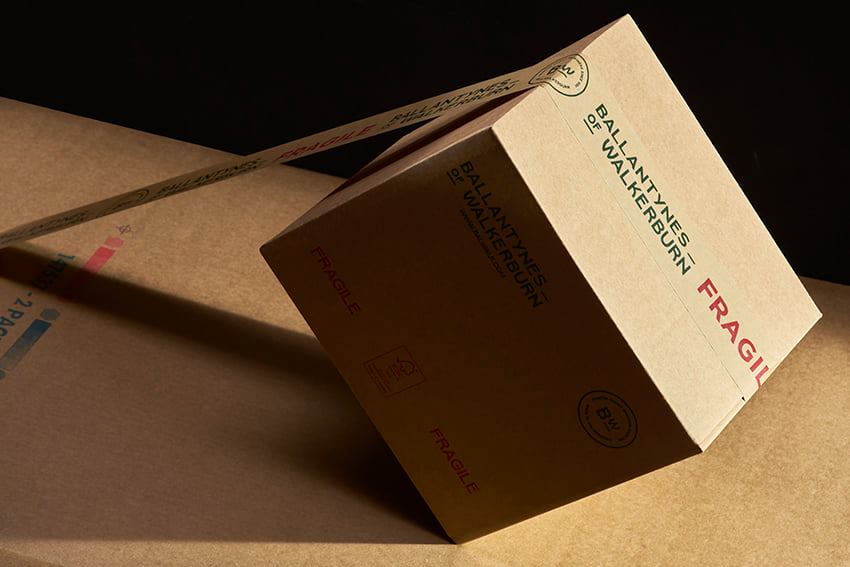
In an effort to be more sustainable we've had our outer packaging redesigned to be fully recyclable. Every statue comes in a simple elegant printed brown box with printed fabric tape.
Inside the box the statue will be protected with bubble wrap and special foam bags to minimise the chance of damage in transit.
| Product Code | B78a |
|---|---|
| Price Code | FA |
| Sculpting Scale | 8" |
| Base Material of the Statue | Cold Cast Resin |
| Height Including Presentation Base | 10" / 25cm |
| Width with Presentation Base | 4.25" / 11cm |
| Depth with Presentation Base | 4.25" / 11cm |
Please be aware that these measurements are not exact and have been rounded for ease.
As every item is individually handmade the exact dimensions may vary slighty.