
Roman Legionary, Tenth Legion
12" Scale Cold Cast Bronze Sculpture of a Roman Legionary of the Tenth Legion at the Battle of the Sabis, fought in 57 BC near modern Saulzoir in Wallonia.
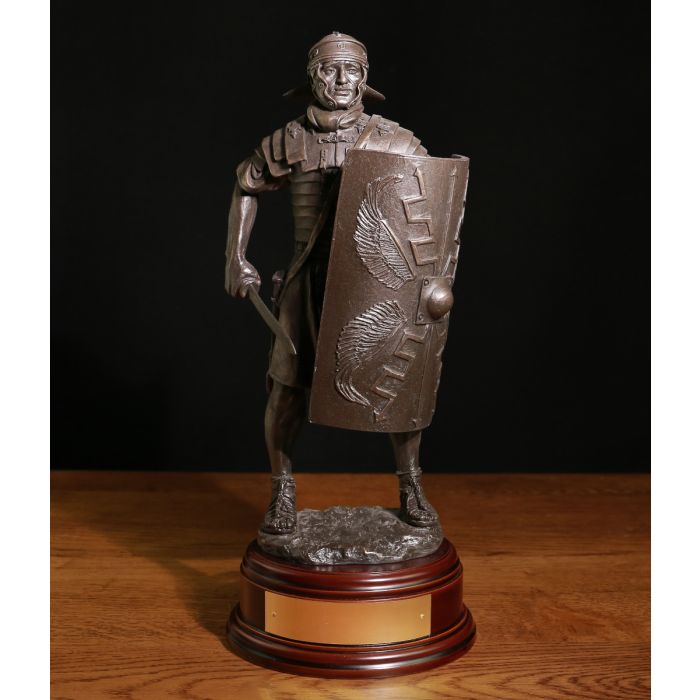
12" Scale Cold Cast Bronze Sculpture of a Roman Legionary of the Tenth Legion at the Battle of the Sabis, fought in 57 BC near modern Saulzoir in Wallonia.
The Tenth Legion - Legio X Equestris - Their Story
When Gaius Julius Caesar arrived as Governor in the province of Baetica or Hispania Ulterior (Farther Spain), as it was in 61 BC, he immediately decided to subdue the west and northwest areas (modern day Portugal). He already had two legions based in the province, the 8th and 9th Legions, which had been enlisted by Gaius Pompeius Magnus (Pompey the Great) in 65 BC. Caesar needed a third legion for his planned campaign and so he immediately enlisted a new legion, the 10th Legion. Enlisted in March, the legion took as its emblem the bull. The Tenth played a crucial part in the Gallic Wars, fighting under Caesar in virtually every battle.
At the beginning of the Gallic campaign, Caesar brought the 10th legion from Spain (with the 7th, 8th and 9th legions). Almost immediately, in the summer of 58 BC the legion fought in two major actions, the Battles of Arar and Bibracte. They played a central part in Caesar's defeat of the Helvetii tribes, preventing their migration from present day Switzerland to western France.
Following the defeat of the Helvetii, the leaders of the Gallic Tribes petitioned Caesar for his aid against Ariovistus, king of the German Suebi tribe. Prior to battle, Ariovistus suggested a peace conference but insisted that each side should only be accompanied by mounted troops. Ariovistus made this a condition knowing that Caesar's cavalry was composed mainly of Aedian horsemen who's loyalty to Caesar was questionable. Caesar ordered a group of his Gallic auxiliaries to dismount and had legionaries from the 10th ride in their place to accompany him to the peace conference. This incident earned the legion its nickname Equestris (mounted). Legio X saved the day in the Battle against the Nervians in 57 BC. Together with the IXth, the Xth defeated the Atrebates, moved against the Belgians on the other side of the river and captured the enemy camp. From that position, the Tenth could see how desperate the situation was for the XII Victrix and the VII, so it quickly charged downhill, crossed the river, and attacked the Nervii from the rear, trapping them so that there was little hope of survival.
In 45 BC the legion was disbanded, and the veterans obtained lands in Narbonne, southern Gaul. During the civil war that followed Caesar's assassination, the Legio X was reconstituted by Lepidus (winter BC44/43), and fought until the final Battle of Philippi. The veterans obtained lands near Cremona, and an inscription reports that the name of the legion at the time was Veneria, "devoted to Venus", the mythical mother of gens Julia. The Tenth later followed Mark Antony in Armenia, during his Parthian campaign. During Antony's civil war, the legion fought for Mark Antony until the defeat in the Battle of Actium, after which the legion moved into Octavian's army. The veterans settled in Patras. When the legion rebelled under Augustus, it was disbanded, stripped of its Equestris title, and, being populated with soldiers from other legions, renamed X Gemina
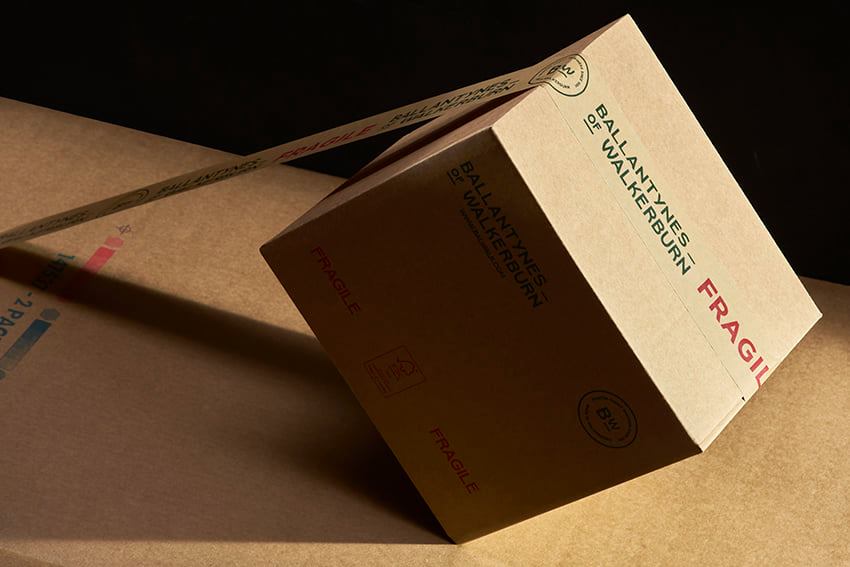
In an effort to be more sustainable we've had our outer packaging redesigned to be fully recyclable. Every statue comes in a simple elegant printed brown box with printed fabric tape.
Inside the box the statue will be protected with bubble wrap and special foam bags to minimise the chance of damage in transit.
All our statues include an optional engraved plate on the wooden base. On the bronze statues the plate is jewellers brass and the pewter/ silver statues have a nickel silver plate.
To add a plate to your statue please select the option above and enter your engraving details. Please note if the engraving is left blank no plate will be included. If you'd like a blank plate please write this in the engraving details.
Please DOUBLE CHECK the engraving as mistakes will require a new plate to be made.
On the engraving the text will be centred and the font sized to fit the plate.
| Product Code | AW300d |
|---|---|
| Price Code | FD |
| Sculpting Scale | 12" |
| Base Material of the Statue | Cold Cast Resin |
| Height Including Presentation Base | 14" / 36cm |
| Width with Presentation Base | 6" / 15cm |
| Depth with Presentation Base | 6" / 15cm |
Please be aware that these measurements are not exact and have been rounded for ease.
As every item is individually handmade the exact dimensions may vary slighty.